শুক্রবার, ৬ নভেম্বর ২০২৬
শুক্রবার, ৬ নভেম্বর ২০২৬

Former President Donald Trump once again left the door open to the possibility of seeking a third term in office, despite the constitutional restrictions explicitly forbidding it. On Monday, during discussions with the press, Trump neither confirmed nor fully dismissed the prospect of running for president again, a move that directly challenges the 22nd Amendment, […]
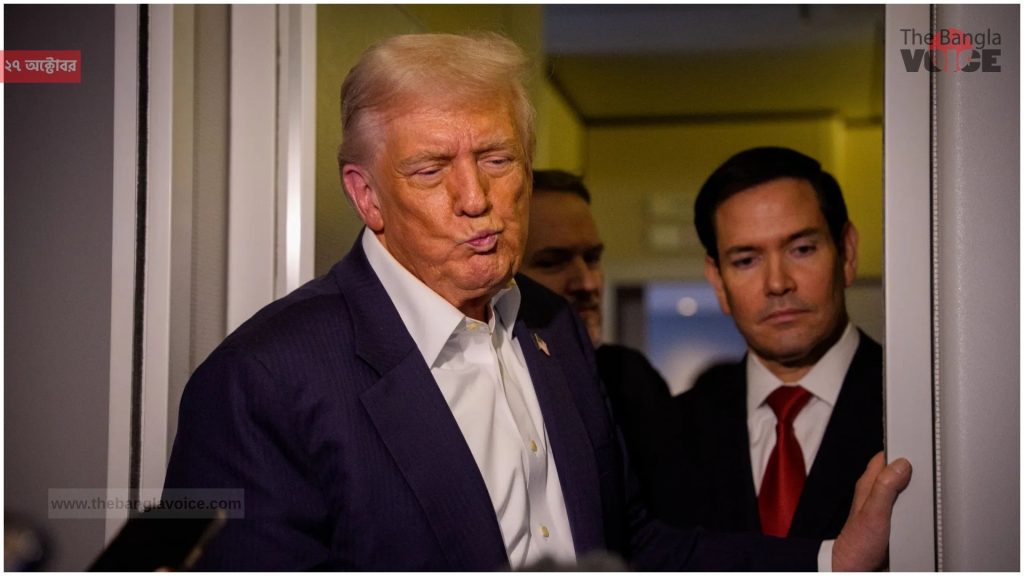
Former President Donald Trump once again left the door open to the possibility of seeking a third term in office, despite the constitutional restrictions explicitly forbidding it. On Monday, during discussions with the press, Trump neither confirmed nor fully dismissed the prospect of running for president again, a move that directly challenges the 22nd Amendment, which limits U.S. presidents to two terms.
In a surprising twist, Trump highlighted a potential political alliance between Vice President JD Vance and Secretary of State Marco Rubio, describing the duo as “unstoppable” if they joined forces. This endorsement signals his ongoing influence within the Republican Party and suggests strategic thinking about future electoral dynamics.
Constitutional Boundaries and Legal Challenges
The U.S. Constitution’s 22nd Amendment clearly states: “No person shall be elected to the office of the President more than twice.” This legal boundary makes any third-term run inherently unconstitutional. Yet, Trump’s repeated hints at a third term have stirred political debate and legal scrutiny.
Steve Bannon, a former Trump adviser and vocal MAGA supporter, recently fueled speculation by claiming there is a plan for Trump to remain in power beyond the legal limits. When pressed about these claims aboard Air Force One, Trump’s response was ambiguous: “I haven’t really thought about it.” He also boasted about having his “best poll numbers ever,” despite polling data that suggests otherwise.
When directly asked if he would rule out a third term, Trump’s evasive reply was, “Am I not ruling it out? You’ll have to tell me.” This non-committal stance further adds to the uncertainty surrounding his political intentions.
Political and Legal Implications
Trump’s refusal to explicitly reject the idea of a third term raises serious questions about the respect for constitutional norms and the rule of law in American democracy. Legal experts have voiced concerns, emphasizing that any attempt to circumvent the 22nd Amendment would face enormous legal hurdles, including the need for a constitutional amendment—a process that requires broad bipartisan support and is notoriously difficult to achieve.
In previous statements, Trump has suggested unconventional methods to bypass term limits, such as having Vance run for president and then “passing the baton” back to him. However, he later dismissed this idea as “too cute,” signaling awareness of the legal and political complexities involved.
The 12th Amendment also complicates such maneuvers by stating that anyone constitutionally ineligible to serve as president cannot serve as vice president either. This provision serves as an additional safeguard against attempts to extend presidential power beyond legal limits.
Why This Matters to Voters and the Nation
The prospect of a third Trump term, unconstitutional though it is, signals ongoing political tensions and challenges to democratic institutions in the United States. For voters, it underscores the importance of understanding constitutional protections and the mechanisms designed to prevent power consolidation.
Furthermore, this situation highlights the broader impact on the Republican Party’s future and the 2024 election cycle. Trump’s endorsement of a Rubio-Vance ticket indicates his continued sway in shaping party leadership and strategy, even as his own political ambitions remain unclear.
Conclusion
President Trump’s ambiguous stance on a third term and his strategic endorsements create a complex political landscape fraught with constitutional questions and electoral implications. While the 22nd and 12th Amendments set clear legal boundaries, Trump’s rhetoric keeps the conversation alive, challenging the strength and resilience of American democratic traditions.
Source: Axios, The Economist, NBC News.







বাঙালির সত্য সংরক্ষণে বাংলা ভয়েজ