সোমবার, ৯ নভেম্বর ২০২৬
সোমবার, ৯ নভেম্বর ২০২৬

In a significant development ahead of New York City’s mayoral race, House Minority Leader Hakeem Jeffries has formally endorsed Zohran Mamdani, a progressive candidate, marking an end to months of hesitation. This endorsement, announced just before early voting began, highlights shifting dynamics within the Democratic Party’s left wing and reflects ongoing debates over policy direction […]
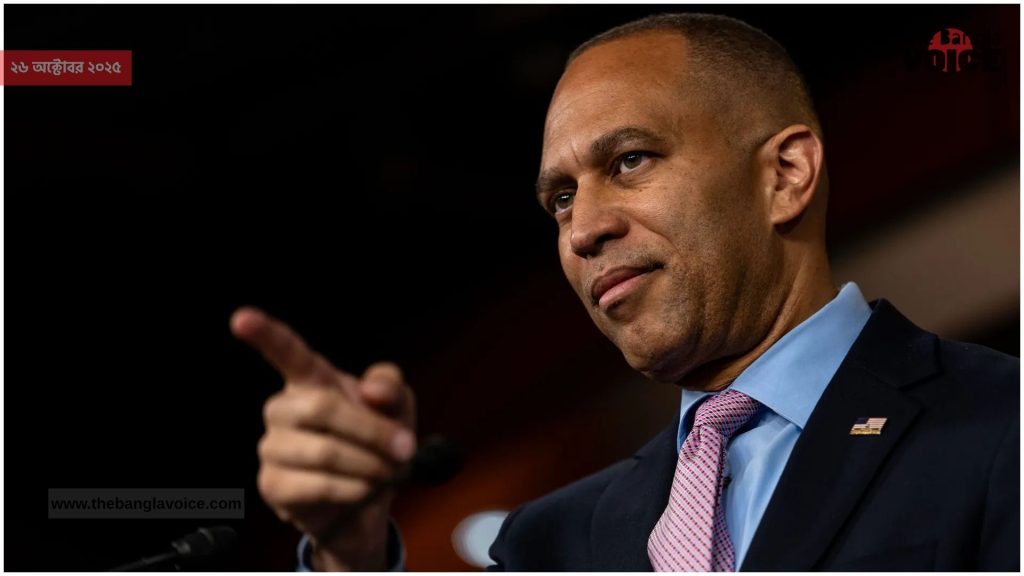
In a significant development ahead of New York City’s mayoral race, House Minority Leader Hakeem Jeffries has formally endorsed Zohran Mamdani, a progressive candidate, marking an end to months of hesitation. This endorsement, announced just before early voting began, highlights shifting dynamics within the Democratic Party’s left wing and reflects ongoing debates over policy direction and party leadership.
Jeffries’ delayed endorsement sparked considerable tension among progressive Democrats. Many left-leaning members quietly expressed frustration with his reluctance to back Mamdani earlier, with some Democratic candidates even citing Jeffries’ indecision as a factor in withholding their support for him as House Minority Leader. Sources indicate Jeffries’ hesitation stemmed from genuine policy disagreements with Mamdani and concerns about protecting members representing competitive districts.
Despite this, Jeffries’ statement showed respect for the voters’ choices, particularly young New Yorkers who have become increasingly engaged in the political process. He praised Mamdani’s dedication to housing affordability, emphasizing the need for a balanced approach that includes partnership with the private sector to increase the supply of affordable homes in the city. Additionally, Jeffries welcomed Mamdani’s commitment to retaining Police Commissioner Jessica Tisch, signaling a pragmatic stance on public safety issues.
Zohran Mamdani responded positively to the endorsement, viewing it as a boost to his campaign and a step toward building a Democratic Party focused on affordability and resistance to what he described as “Trump’s authoritarianism.” Mamdani’s campaign emphasizes a break from traditional politics, advocating for transformative policies against the influence of big money and advocating bold ideas to address city challenges.
However, the endorsement did not come without controversy. Some centrist House Democrats from New York have openly refused to support Mamdani due to his progressive policy positions, illustrating ongoing ideological divides within the party. Meanwhile, opposition voices criticized Jeffries’ move. The National Republican Congressional Committee condemned the endorsement, framing it as a capitulation to a “socialist mob” and a sign of the Democratic Party’s far-left shift, which they argue undermines the party’s chances of regaining the House of Representatives.
This episode underscores the growing ideological polarization within the Democratic Party, especially in urban political contests like New York City’s mayoral race. For voters, Jeffries’ endorsement may influence perceptions of Mamdani’s viability as a candidate capable of balancing progressive ideals with pragmatic governance. The endorsement also highlights the challenges party leaders face in uniting diverse factions to present a cohesive front in critical elections.
As New Yorkers head to the polls, the spotlight will be on how this endorsement impacts voter turnout and support for Mamdani’s campaign, and whether it can bridge the divide between the party’s progressive base and its more moderate members. The outcome will have implications not only for city governance but also for the broader direction of the Democratic Party ahead of future national elections.
Source: Axios, The New York Times.




বাঙালির সত্য সংরক্ষণে বাংলা ভয়েজ