সোমবার, ৯ নভেম্বর ২০২৬
সোমবার, ৯ নভেম্বর ২০২৬

In a significant move to navigate the evolving economic landscape, the Federal Reserve approved a second consecutive reduction in its benchmark interest rate on Wednesday, bringing the range down to 3.75%-4%. However, the decision was accompanied by cautious remarks from Fed Chair Jerome Powell, who raised doubts about the likelihood of further easing in the […]
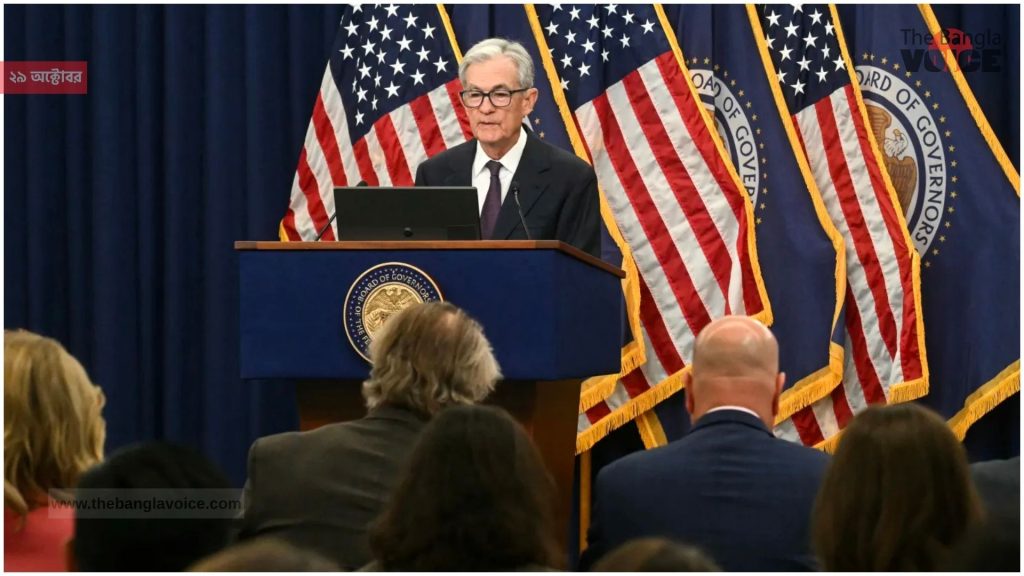
In a significant move to navigate the evolving economic landscape, the Federal Reserve approved a second consecutive reduction in its benchmark interest rate on Wednesday, bringing the range down to 3.75%-4%. However, the decision was accompanied by cautious remarks from Fed Chair Jerome Powell, who raised doubts about the likelihood of further easing in the upcoming December meeting, injecting a note of uncertainty into market expectations.
The Federal Open Market Committee (FOMC) voted 10-2 to lower the overnight borrowing rate, signaling an ongoing effort to balance economic growth with inflationary pressures. Alongside the rate cut, the Fed announced an end to its quantitative tightening (QT) program starting December 1, halting the reduction of its asset holdings, which currently stand at $6.6 trillion. This move reflects a strategic pivot aimed at stabilizing financial markets amid fluctuating economic signals.
Dissenting opinions within the committee highlighted the complexity of the decision. Governor Stephen Miran advocated for a more aggressive half-point cut, while Kansas City Fed President Jeffrey Schmid preferred no cut at all, illustrating the diverse perspectives on the path forward. Miran’s stance aligns with former President Donald Trump’s push for faster rate reductions, underscoring the political and economic interplay influencing Fed policymaking.
Crucially, the post-meeting statement refrained from forecasting the December agenda, diverging from the September meeting’s implication of three cuts for the year. Traders, who had priced in an 85% chance of another cut, responded with volatility as Powell emphasized the absence of consensus on further easing. His remarks highlighted a “growing chorus” among Fed officials favoring a wait-and-see approach, reflecting caution amid incomplete economic data due to recent government reporting suspensions.
The Fed’s acknowledgment of moderate economic expansion, slower job gains, and persistent inflation above the 2% target provides context for its cautious stance. The labor market shows signs of softening, with increased downside risks to employment, while inflation remains elevated at an annual rate of 3%, driven in part by energy costs and tariff-related price pressures. These dynamics place the Fed in a delicate position, balancing the dual mandate of fostering maximum employment and price stability.
Ending the QT program marks a significant shift, as the Fed has been reducing its Treasury and mortgage-backed securities holdings by allowing assets to mature without reinvestment, effectively contracting its balance sheet by $2.3 trillion since the pandemic peak. The decision to roll maturing mortgage securities into shorter-term bills signals an intent to maintain liquidity and prevent undue tightening in credit markets, which have recently exhibited signs of strain.
Market analysts, including Evercore ISI’s Krishna Guha, speculate that the Fed might even resume asset purchases early in 2026 to support “organic growth,” highlighting the fluidity of monetary policy in response to changing economic conditions. Historically, rate cuts during economic expansions and robust stock markets have propelled further gains, though they carry the inherent risk of reigniting inflationary pressures that previously necessitated aggressive hikes.
This latest Fed action underscores the challenges of policymaking in an environment marked by data scarcity and competing economic signals. For consumers, the rate cut influences borrowing costs on mortgages, auto loans, and credit cards, potentially easing financial burdens but also reflecting the broader uncertainties facing the economy.
Source: Federal Reserve official statements, CME Group FedWatch, Evercore ISI analysis, and recent economic reports.







বাঙালির সত্য সংরক্ষণে বাংলা ভয়েজ