
শনিবার, ৭ নভেম্বর ২০২৬
শনিবার, ৭ নভেম্বর ২০২৬

Former U.S. President Donald Trump recently expressed a strong desire for China to assist in persuading Russia to engage in peace negotiations over the ongoing war in Ukraine. Speaking aboard Air Force One during his trip to Asia, where he is scheduled to meet Chinese President Xi Jinping in South Korea, Trump underlined the importance […]
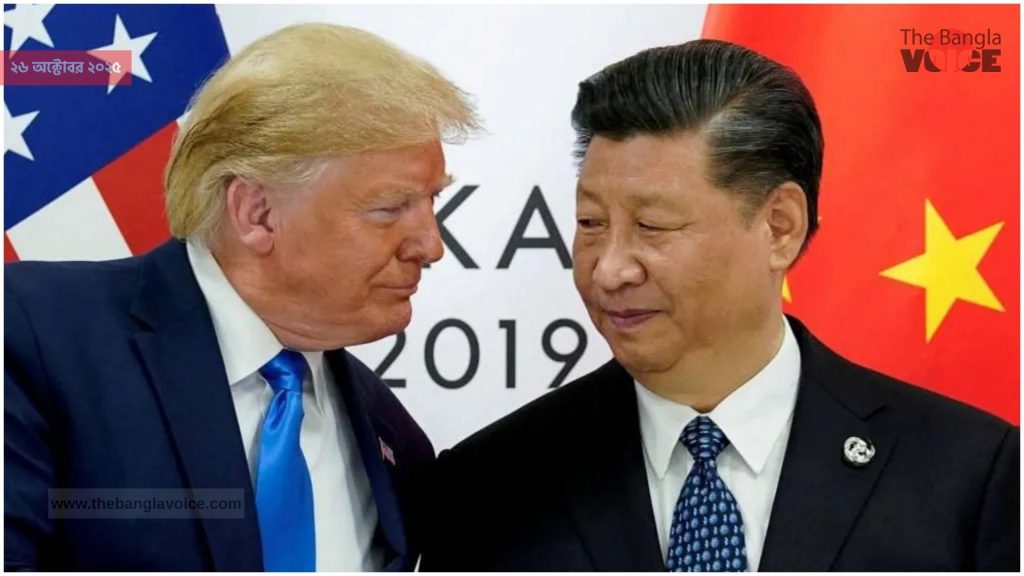
Former U.S. President Donald Trump recently expressed a strong desire for China to assist in persuading Russia to engage in peace negotiations over the ongoing war in Ukraine. Speaking aboard Air Force One during his trip to Asia, where he is scheduled to meet Chinese President Xi Jinping in South Korea, Trump underlined the importance of leveraging China’s influence over Moscow to help bring an end to the conflict.
China remains Russia’s most significant global ally, providing crucial economic and diplomatic support to Moscow, especially after Western nations imposed stringent sanctions in response to Russia’s military actions in Ukraine. Despite this alliance, Trump conveyed hope that China might play a mediating role, emphasizing his reportedly positive relationship with President Xi and noting Xi’s interest in seeing the war concluded.
This development comes amid a challenging period for Ukraine. The United States recently declined Kyiv’s request for Tomahawk cruise missiles, while European Union leaders hesitated to release frozen Russian assets that Ukraine hoped to use for defense funding. Simultaneously, Ukraine has endured a series of devastating strikes, including deadly attacks in its capital, Kyiv.
For months, Trump has made ending the Russia-Ukraine war a priority, though his efforts have yet to yield a ceasefire or peace deal. His August summit with Russian President Vladimir Putin failed to produce significant progress, leaving Trump increasingly frustrated with Moscow’s stance. He remarked that while his conversations with Putin are often amicable, they rarely result in concrete outcomes.
In a recent move, Trump announced new sanctions targeting Russia’s two largest oil companies—marking a direct intervention by the Trump administration against Russia’s economic interests in the conflict. The long-term impact of these sanctions remains uncertain, with the Kremlin asserting resilience against them.
While trade tensions between the U.S. and China are expected to dominate Trump’s upcoming discussions with Xi, he affirmed that the war in Ukraine will also be a key topic. Trump highlighted President Xi’s potential to influence Putin and expressed optimism about China’s willingness to help.
China, for its part, has maintained a neutral public stance, refraining from condemning Russia’s invasion and denying allegations from the U.S. and its allies of aiding Russia’s war efforts. Beijing continues to purchase Russian oil and supply dual-use materials that have both civilian and military applications. The close ties between the two nations were evident during a recent meeting in Beijing, where Putin, Xi, and North Korean leader Kim Jong Un showcased a united front, signaling strong diplomatic and military solidarity.
While these geopolitical maneuvers unfold, the human toll of the conflict remains severe. Recent Russian attacks have claimed multiple lives and caused extensive damage in Kyiv and other parts of Ukraine. Ukrainian President Volodymyr Zelensky has called on international allies to increase their support, stressing that no nation should face such aggression alone.
In Russia’s Belgorod region, residents near a damaged dam were ordered to evacuate following a Ukrainian strike that raised fears of flooding, highlighting the broader risks and instability the war continues to generate.
The broader implications: Trump’s appeal to China reflects an understanding of the complex global dynamics shaping the Ukraine conflict. China’s role as a key mediator could potentially open new pathways for dialogue, but the deep-rooted alliances and geopolitical interests involved make the path to peace uncertain. For readers and global observers, the ongoing situation underscores the critical need for diplomatic efforts alongside humanitarian support to alleviate suffering and restore stability.
Source: BBC News.








বাঙালির সত্য সংরক্ষণে বাংলা ভয়েজ